

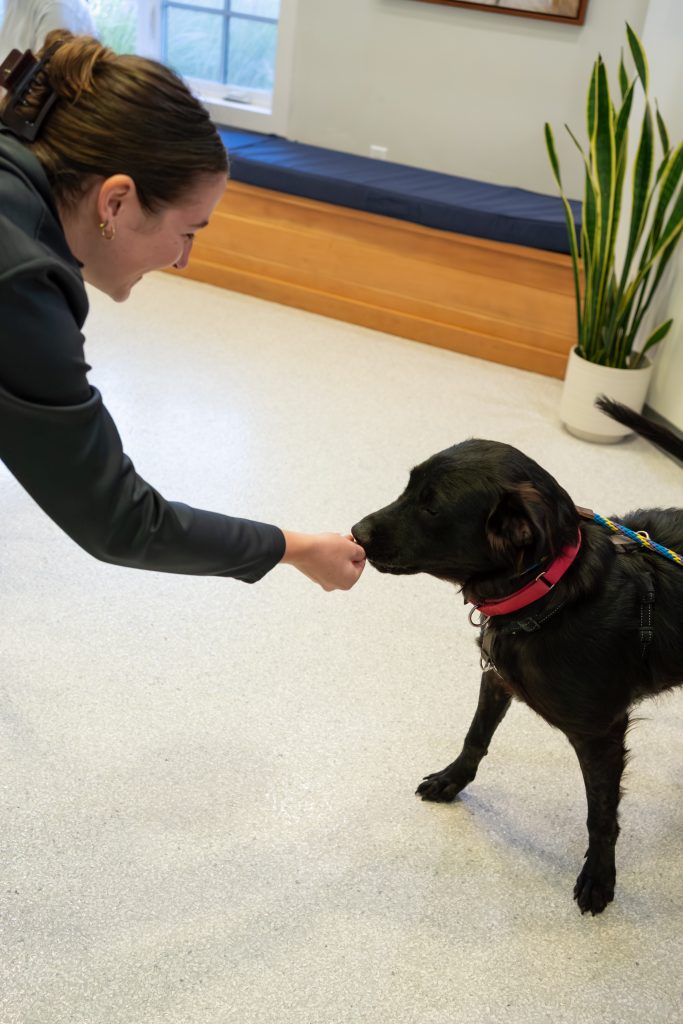
At Coast Veterinary Services, we believe that veterinary care should be as stress-free as possible—for both pets and their people. Using low-stress handling techniques, our trained team focuses on gentle restraint, positive reinforcement, and creating a calm, supportive environment for every visit. But a great experience starts at home. Here are simple ways you can help your pet feel more comfortable before they even walk through our doors.
What Is Low-Stress Handling?
Low-stress handling means working with your pet—not against them. We use:
- Gentle, minimal restraint techniques
- Positive reinforcement (treats, praise, and calm voices)
- Pheromone sprays in exam rooms to promote relaxation
- Special treats (like frozen “pup cups” during acupuncture and longer visits)
- A pace that allows pets to feel safe and in control
Our goal is to reduce fear, anxiety, and stress at every step.
Tips to Prepare Your Pet for Vet Visits
1. Get Comfortable with the Carrier (Cats & Small Dogs)
- Leave the carrier out at home year-round—not just for vet visits
- Add soft bedding and treats inside to create a positive association
- Practice short “practice runs” without going anywhere
2. Carry the Carrier Securely
- Always support the carrier from the bottom, not just the handle
- This prevents swinging, which can increase anxiety and motion sickness
3. Use a Leash for Safe Arrivals (Dogs)
- Even well-trained dogs can become nervous in a new environment
- Keep your dog on a leash when entering and exiting the clinic for safety and control
4. Bring High-Value Treats
- Your pet’s favorite treats can make a huge difference
- We’ll use them during exams to create positive associations
5. Practice Gentle Handling at Home
- Get your pet used to having their ears, mouth, and feet handled
- Keep sessions short, calm, and reward with treats
- This helps exams feel familiar instead of stressful
6. Consider Waiting in the Car or Patio
- Some pets become anxious seeing or hearing other animals
- Waiting in your car or on our patio (when available) can help reduce stress before the appointment
7. Consider Pre-Visit Sedation (When Recommended)
- Some pets benefit greatly from mild anti-anxiety medication before their visit
- This is not a last resort—it’s a proactive way to reduce stress and improve the experience
- Ask us if this may be helpful for your pet
8. Practice Muzzle Training (If Needed)
- Muzzles are a safety tool—not a punishment
- Training your dog to comfortably wear a muzzle at home can reduce stress if it’s ever needed during a visit
- Pair muzzle time with treats and positive experiences
We’re Here to Help
Every pet is different, and our team is happy to tailor a plan that works best for you and your animal. Whether it’s behavioral tips, training guidance, or medication support, we’re committed to making veterinary care a positive experience.
If you have questions or would like help preparing for your pet’s next visit, give us a call—we’re here for you every step of the way.